The South African healthcare sector is facing intense regulatory scrutiny following a major raid on a compounding pharmacy in Pretoria. The South African Health Products Regulatory Authority (SAHPRA) targeted iDexis, trading as Sentra Pharmacy in Silverton. This joint operation with the South African Pharmacy Council (SAPC) highlights growing concerns over the booming local weight-loss market.
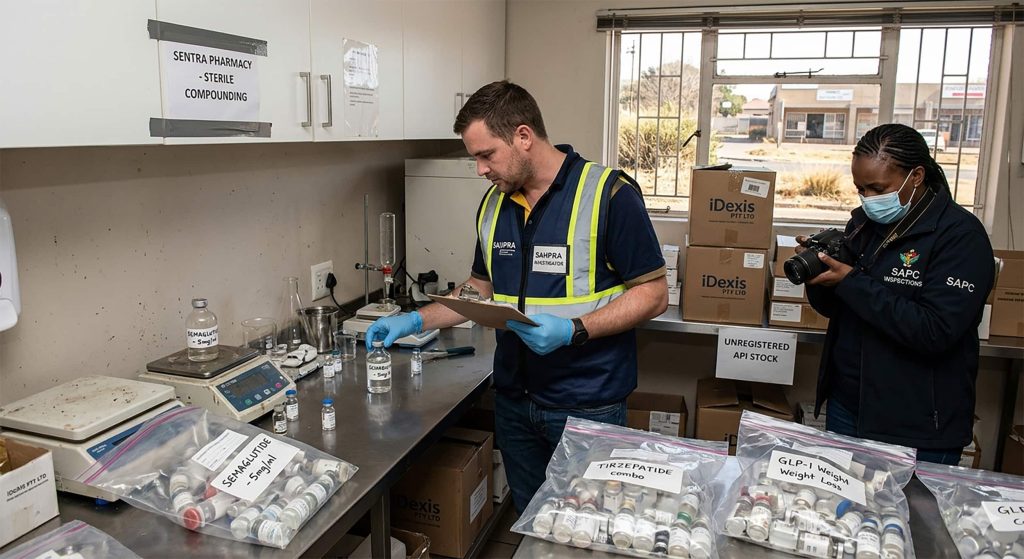
The Raid On Sentra Pharmacy In Pretoria
Regulators focused their raid on injectable products containing semaglutide and tirzepatide. These hormone-mimicking medicines are highly sought-after for managing diabetes and obesity. However, skyrocketing demand has fuelled a dangerous underground network supplying unregistered treatments. During the inspection, officials discovered severe compliance failures and seized all GIP and GLP-1 injectable products found on the premises.
Regulators Crack Down On Illicit GLP-1 Manufacturing
According to SAHPRA, the business operated far outside the legal framework governing compounded medicines. Traditional compounding allows pharmacists to prepare customised medications for individual patient prescriptions. Instead, authorities allege that iDexis engaged in unauthorised, large-scale production.
The official inspection exposed critical deficiencies in safety and quality assurance. Regulators uncovered the illegal importation of active pharmaceutical ingredients. Furthermore, the facility lacked essential analytical testing to verify product purity and potency. Officials noted that the sterile manufacturing conditions were deeply inadequate, creating a high risk of bacterial contamination. This enforcement action marks a wider crackdown on illicit GLP-1 manufacturing across South Africa.
The Health Risks Of Illicit GLP-1 Manufacturing
The underground market for weight-loss injections poses severe public health threats. Unverified products are frequently smuggled into South Africa from international hubs like China. Unscrupulous operators then promote these fake medications across social media platforms like Facebook. Desperate consumers routinely purchase these black-market jabs without any medical oversight.
Regulators warn that illicit GLP-1 manufacturing exposes patients to incorrect dosages and toxic ingredients. Injecting unverified substances prepared in substandard facilities can cause severe systemic infections. SAHPRA is actively targeting local pharmacies to sever these illegal supply chains at their source.
Firm Enforcement Action Promised By Industry Leaders
SAHPRA Chief Executive Officer Boitumelo Semete-Makokotlela vowed to eliminate fake health products. She emphasised that unregistered medicines directly endanger patient lives. The regulator will continue to enforce the Medicines and Related Substances Act aggressively.
Concurrently, SAPC Chief Executive Officer Vincent Tlala issued a stern warning to professionals. Pharmacists who facilitate illegal drug manufacturing face severe disciplinary action. Compromising patient safety will result in immediate removal from the official pharmacy register. Healthcare professionals must only distribute approved, registered medications.
Read the Original Article (May require a subscription)