Cancer vaccines based on mRNA technology are showing encouraging results against some of the world’s hardest-to-treat cancers, including melanoma, pancreatic cancer and glioblastoma.
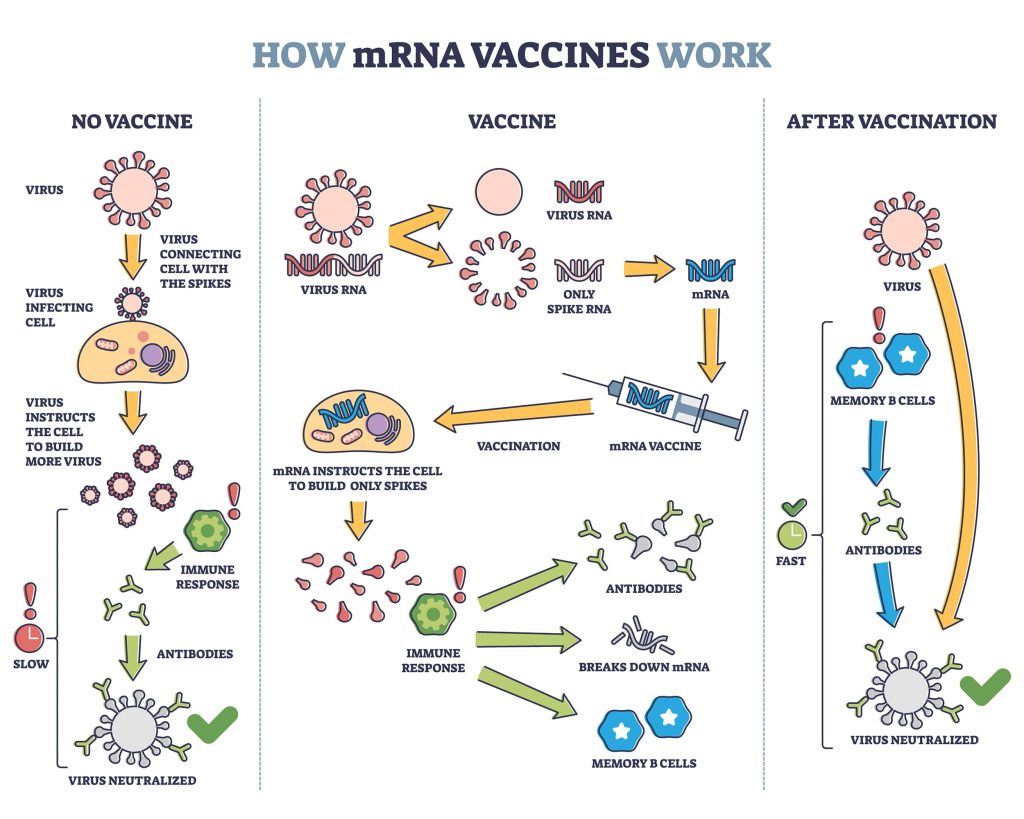
The same technology used to develop COVID-19 vaccines at record speed is now being tested to train the immune system to recognise and destroy cancer cells. In addition, researchers say the field has become one of the fastest-growing areas of cancer science.
Interest in the approach was clear at the American Society of Clinical Oncology meeting in Chicago this month, where more than 130 studies linked to cancer vaccine research were presented. Meanwhile, universities, hospitals and major pharmaceutical companies are now investing heavily in mRNA-based cancer treatments.
Moderna and Merck report melanoma progress
One of the most closely watched developments comes from Moderna and Merck, which are testing a personalised mRNA cancer vaccine. They are testing this vaccine alongside a powerful immunotherapy drug in patients with melanoma.
Melanoma is one of the most dangerous forms of skin cancer and can return after initial treatment. However, the experimental therapy has helped keep melanoma from returning for five years in some patients. This marks an important milestone for personalised cancer vaccines.
The treatment works by creating a made-to-order vaccine based on the unique mutations found in a patient’s tumour. Moreover, the vaccine is designed to teach the immune system to recognise cancer-specific targets and destroy any remaining cancer cells after surgery or other treatments.
Moderna and Merck are now testing mRNA-based therapies in several large and mid-sized trials. These include studies involving lung, kidney, bladder and pancreatic cancers. Early results from a major confirmatory melanoma trial may be released this year.
Pancreatic cancer trial offers early hope
Researchers are also seeing early signs of promise in pancreatic cancer. This disease has long been difficult for the immune system to detect.
Dr Vinod Balachandran of Memorial Sloan Kettering Cancer Center was among the first scientists to investigate whether mRNA vaccines could help patients with pancreatic cancer. His work was inspired by rare cases in which some patients survived longer than expected. This was because their immune systems appeared able to recognise and attack their tumours.
A phase 1 trial involving 16 patients tested a treatment combination that included chemotherapy, Roche’s immunotherapy Tecentriq and a personalised mRNA vaccine from BioNTech.
Of the eight pancreatic cancer patients whose immune systems responded to the vaccine, seven were still alive up to six years later, according to results presented at a cancer research meeting in April.
A larger global phase 2 trial involving 260 patients is now underway. This trial aims to confirm whether the early findings can be repeated in more people.
Scientists target aggressive brain cancer
mRNA vaccine technology is also being studied in glioblastoma, an aggressive brain cancer with a five-year survival rate of under 7%.
Dr Elias Sayour from the University of Florida has developed an experimental vaccine that uses clusters of lipid nanoparticles to deliver mRNA into the body. The aim is to trigger a rapid immune response against the fast-growing cancer.
Sayour said even a small breakthrough in glioblastoma could have major implications for other cancers.
Politics and investment shape the future
The scientific progress comes as US officials send mixed signals about mRNA technology. For example, the US Department of Health and Human Services, led by Robert F Kennedy Jr, has cut $500 million from mRNA vaccine projects.
However, the National Cancer Institute is working with the Foundation for the National Institutes of Health on a $200 million public-private partnership to fund promising cancer vaccine trials. This includes those based on mRNA.
Scientists warn that politicising mRNA research could slow medical innovation.
Pharmaceutical companies, including Moderna, Merck, BioNTech and Roche, are investing heavily in personalised cancer vaccines. Market researchers estimate the sector, driven largely by mRNA technology, could reach $8.5 billion annually by 2034.